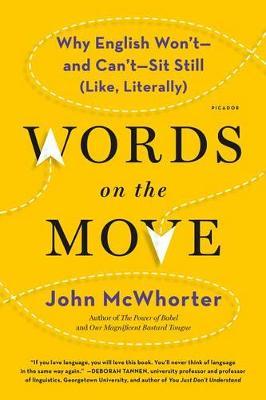
Language is always changing, but the way English is spoken today rubs many of us the wrong way. Whether it’s the use of literally to mean “figuratively,” or the way young people use LOL or business jargon like What’s the ask?–it often seems as if the language is deteriorating before our eyes.

But the truth is different and a lot less scary. Drawing examples from everyday life and employing a generous helping of humor, John McWhorter shows that these shifts are common to all languages, and that we should embrace these changes, not condemn them.
He opens our eyes to the surprising backstories to words and expressions we use every day. Did you know that silly once meant “blessed”? Or that ought was the original past tense of owe? Or that the suffix -ly in adverbs is actually a remnant of the word like?
In Words on the Move, McWhorter encourages us to marvel at the dynamism and resilience of the English language, and his book offers a delightful journey where we see that words are ever on the move and our lives are all the richer for it.