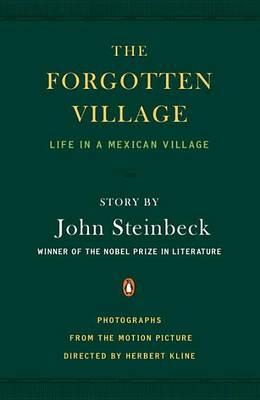
The novelist who wrote The Grapes of Wrath and the director who produced Crisis and Lights Out in Europe combined their superb talents to tell the story of the coming of modern medicine to the natives of Mexico. There have been several notable examples of this pen-camera method of narration, but The Forgotten Village is unique among them in that Steinbeck wrote the text before a single picture was shot. The book and the movie from which The Forgotten Village was made have a continuity and a dramatic growth not to be found in typical documentary films of the time.

From this wealth of pictures, 136 photographs were selected for their intrinsic beauty and for the graceful harmony with which they accompany Steinbeck’s text. This new script-photograph technique of narration conveys its ideas with unexcelled brilliance and immediacy. In the hands of such master storytellers as Steinbeck and Kline, it makes the reader catch his breath.