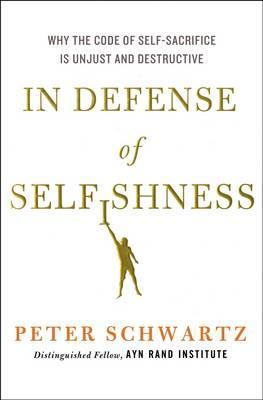
From childhood, we’re taught one central, non-controversial idea about morality: self-sacrifice is a virtue. It is universally accepted that serving the needs of others, rather than our own, is the essence of morality. To be ethical – it is believed – is to be altruistic. Questioning this belief is regarded as tantamount to questioning the self-evident. Here, Peter Schwartz questions it. In Defense of Selfishness refutes widespread misconceptions about the meaning of selfishness and of altruism. Basing his arguments on Ayn Rand’s ethics of rational self-interest, Schwartz demonstrates that genuine selfishness is not exemplified by the brutal plundering of an Attila the Hun or the conniving duplicity of a Bernard Madoff. To the contrary, such people are acting against their actual, long-range interests. The truly selfish individual is committed to moral principles and lives an honest, productive, self-respecting life. He does not feed parasitically off other people. Instead, he renounces the unearned, and deals with others – in both the material and spiritual realms – by offering value for value, to mutual benefit.