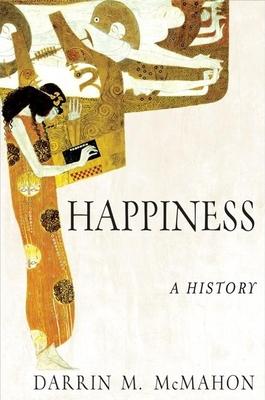
Today, human beings tend to think of happiness as a natural right. But they haven’t always felt this way. For the ancient Greeks, happiness meant virtue. For the Romans, it implied prosperity and divine favor. For Christians, happiness was synonymous with God. Throughout history, happiness has been equated regularly with the highest human calling, the most perfect human state. Yet it’s only within the past two hundred years that human beings have begun to think of happiness as not just an earthly possibility but also as an earthly entitlement, even an obligation. In this sweeping new book, historian Darrin M. McMahon argues that our modern belief in happiness is the product of a dramatic revolution in human expectations carried out since the eighteenth century.
In the tradition of works by Peter Gay and Simon Schama, Happiness draws on a multitude of sources, including art and architecture, poetry and scripture, music and theology, and literature and myth, to offer a sweeping intellectual history of man’s most elusive yet coveted goal.